

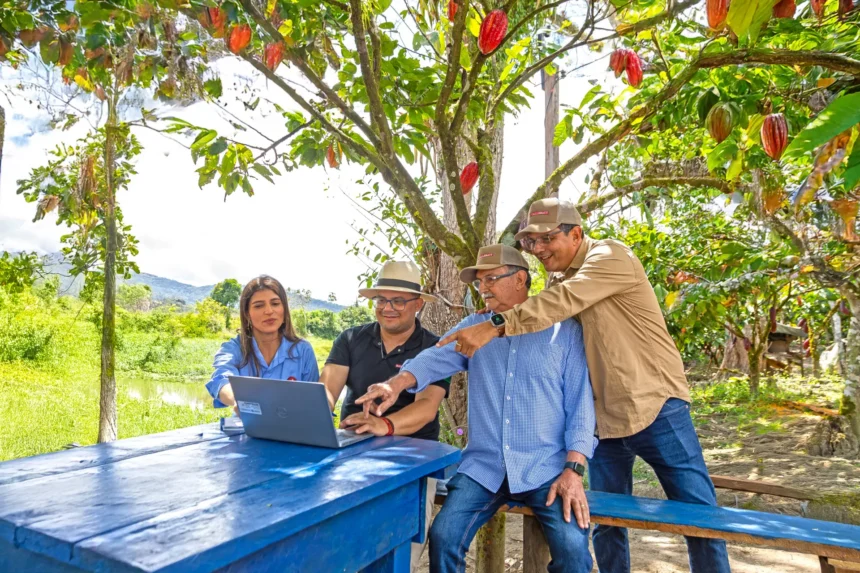
Barry Callebaut is carrying its Cocoa Horizons program into its next phase, sharpening its focus on measurable outcomes across cocoa farming, human rights and environmental protection.
The program currently supports more than 350,000 cocoa farmers through 1,400 coaches and professionals operating across Côte d’Ivoire, Ghana, Cameroon, Nigeria, Indonesia, Brazil and Ecuador. The Cocoa Horizons Foundation also reports purchases of more than 186,000 tonnes of cocoa beans, with close to 900 participating customers across food manufacturing, packaged goods, distribution and artisan businesses.
Established in 2015, the independently verified program uses premiums generated from Cocoa Horizons cocoa and chocolate products to fund activities in producing communities. Its current work is organised around three areas: prospering farmers, empowered communities and thriving nature.
Moving from training to farm investment
The sharpened Cocoa Horizons approach places less emphasis on the number of farmers attending training sessions and more on whether interventions improve productivity, income and resilience.
Support can include individual farm planning, planting materials, soil management, labour services, financing and income diversification. This reflects a wider recognition that knowledge alone cannot address the economic pressures facing cocoa farmers if they lack the capital, labour or inputs required to invest in their farms.
Within Barry Callebaut’s broader Forever Chocolate strategy, the company reports that 557,739 cocoa farmers in its supply chain are now above the poverty line. The longer-term objective is to help establish a farming model capable of generating a living income, supported by farm-level investment, climate resilience and policy reform.
Human rights and environmental due diligence
Cocoa Horizons is also extending its human rights work beyond identifying individual cases of child labour. The program is strengthening community-based protection systems, human rights committees and grievance mechanisms intended to address underlying risks and improve local ownership.
Environmentally, the focus includes farm mapping, deforestation due diligence, agroforestry and lower-carbon farming practices. Barry Callebaut’s latest wider sustainability reporting shows that more than 1.5 million cocoa farms have been mapped, with 85.6 per cent of cocoa volumes in its direct supply chain traceable to farm level.
Agroforestry is becoming increasingly important within this work. Integrating shade and native trees into cocoa farms can support biodiversity, improve farm resilience and generate carbon removals that contribute to supply-chain emissions targets.
For foodservice operators and chocolate buyers, the direction signals a shift in how sustainable cocoa is assessed. Procurement discussions are increasingly moving beyond a single certification claim towards traceability, due diligence, verified reporting and evidence of investment at farm and community level.
The Cocoa Horizons Foundation publishes activity reports twice a year and its program is externally verified by PwC. The latest reports and verification documents are available through the Foundation’s website.