
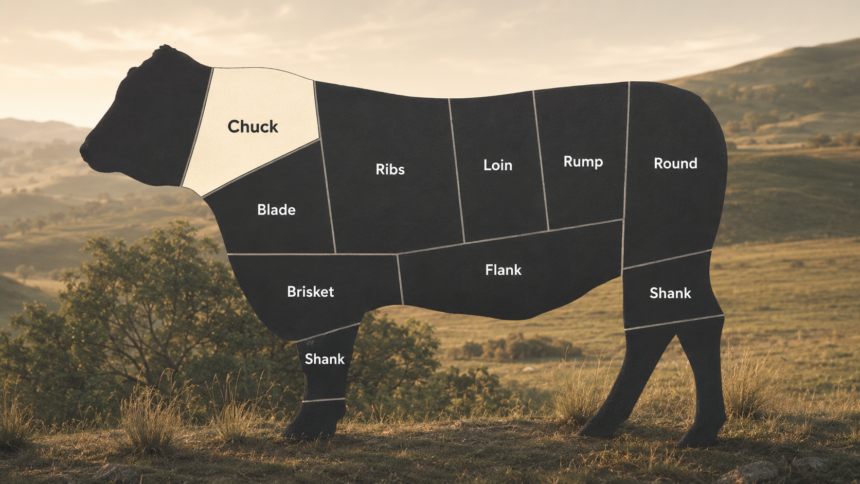
Beef purchasing becomes more complicated when familiar cut names refer to several different specifications. Kilcoy Global Foods’ interactive beef cuts tool gives chefs and foodservice buyers a visual reference for understanding where individual cuts are located and how they are defined.
The tool begins with the major primal sections, including the rib, chuck, blade, brisket, loin, rump, round, shank, flank and short rib. Selecting a section reveals the cuts derived from that primal, supported by images, anatomical descriptions and applicable AUS-MEAT identification numbers.
Exploring the rump, for example, brings up options including rump cap, D-rump, rostbiff and tri-tip. The chuck section covers chuck eye roll, chuck short rib, chuck tender, chuck rib meat and chuck roll. This makes it easier to understand the relationship between cuts that may arrive under similar descriptions but perform differently in the kitchen.
More precise supplier conversations
The inclusion of AUS-MEAT codes is particularly useful for procurement. Rather than ordering a broadly described cut, chefs can identify a recognised specification such as rump cap 2091, tri-tip 2131, oyster blade 2303 or cube roll 2240.
That additional detail can reduce misunderstandings between kitchens, wholesalers and processors, particularly when developing specifications across multiple venues. It can also help chefs confirm whether quoted products are genuinely comparable before making a purchasing decision based on price.
A practical training resource
The visual format gives kitchen teams a clearer understanding of how cuts relate to the whole carcase. This can support training around fabrication, menu terminology and selecting the right preparation method.
Cuts from heavily worked areas generally require a different approach from naturally tender loin and rib cuts. Using the tool during menu development can encourage chefs to look beyond tenderloin and striploin and assess alternatives such as bolar blade, chuck eye roll, rump cap or tri-tip.
These cuts may offer opportunities for roasting, braising, slow cooking or portion-controlled steak applications, depending on the specification and desired result.
The platform should be treated as a technical reference rather than a cooking or costing calculator. Chefs will still need to test yield, trimming requirements, portion size and cooking performance against their own equipment and menu price.
Used alongside supplier pricing and kitchen trials, however, Kilcoy’s interactive tool provides a clearer starting point for purchasing discussions and helps chefs make more informed use of the beef carcase.