
Barry Callebaut is positioning the Callebaut Taste Wheel as more than a product-selection guide. The sensory framework is also designed to support new product development, reformulation and chocolate portfolio planning.
Taste may be the primary reason a customer chooses one chocolate product over another, but the language used to describe it is often subjective. Terms such as rich, smooth, intense or premium can carry different meanings for a chef, product developer, marketer or customer.
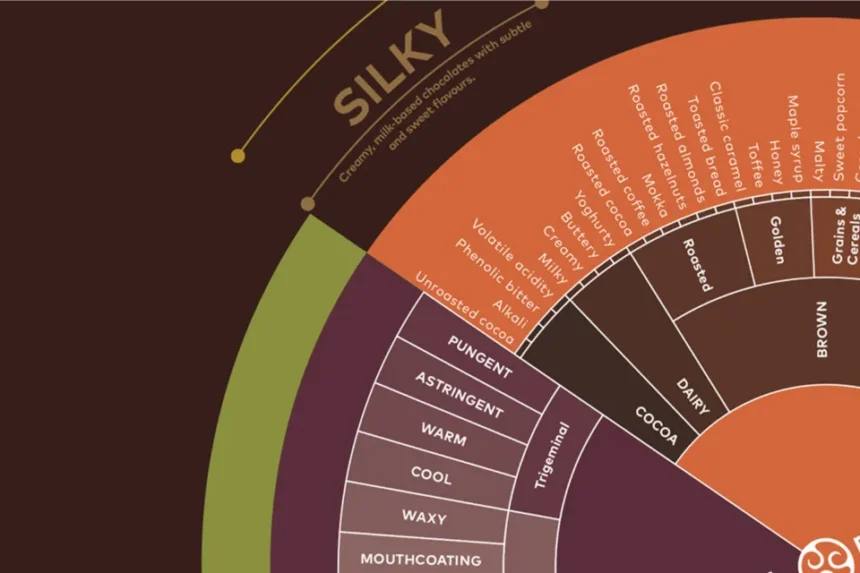
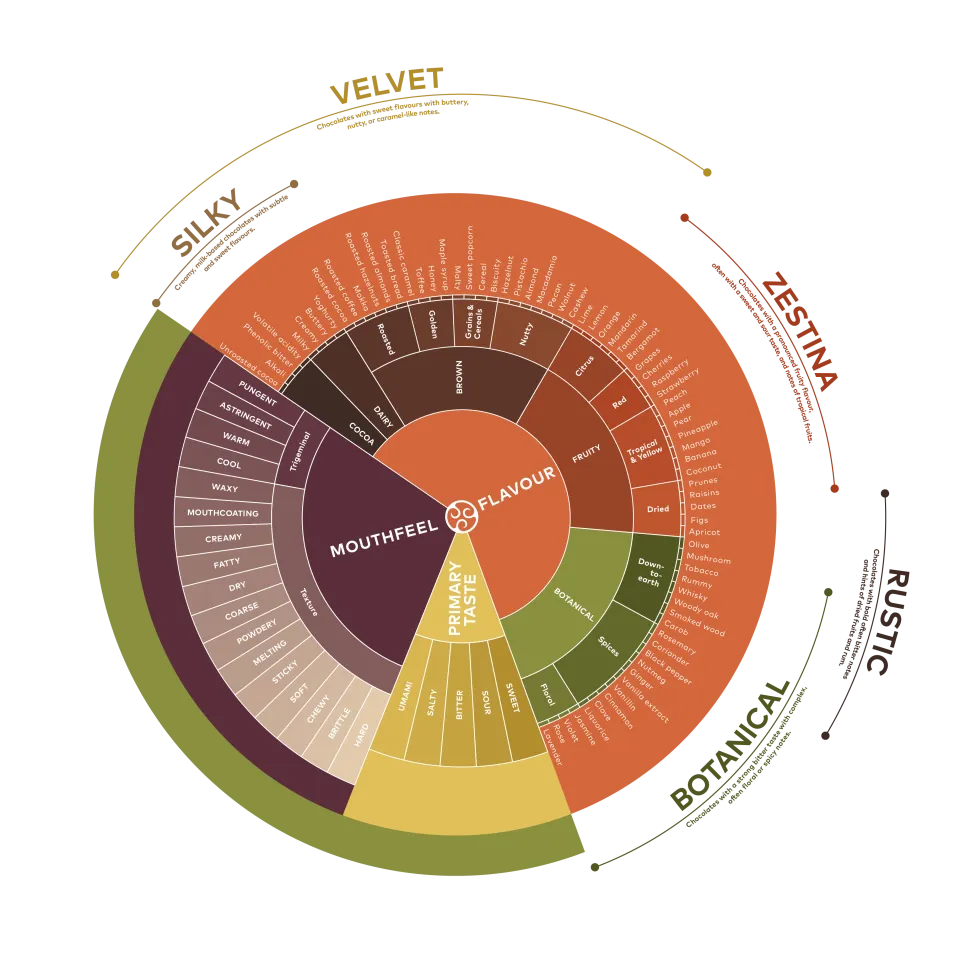
The Taste Wheel addresses that inconsistency by assessing chocolate across three areas: primary taste, mouthfeel and flavour. This gives teams a defined vocabulary for discussing sweetness, bitterness, acidity, melt, creaminess and aromatic character before development begins.
Five profiles for mapping a chocolate range
Within its flavour dimension, the framework groups chocolate into five core profiles:
- Silky: Creamy milk chocolate with restrained sweetness.
- Velvet: Sweet chocolate with buttery, nutty or caramel notes.
- Zestina: Fruit-driven chocolate with sweet-and-sour or tropical characteristics.
- Rustic: More bitter chocolate with dried fruit and rum-like notes.
- Botanical: Bitter chocolate with floral, herbal or spicy complexity.
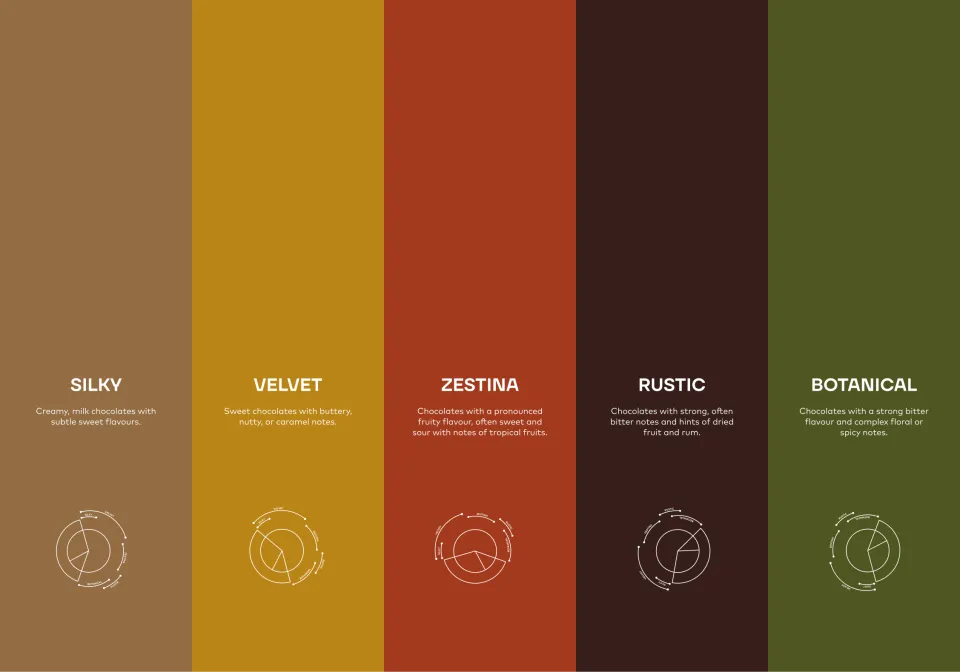
These categories can be used to map an existing range and identify where products overlap. If several products sit within a similar Silky or Velvet profile, for example, a business may decide to consolidate the range or clarify the role of each product. An absence of Zestina or Botanical characteristics may also indicate an opportunity for a more fruit-led, aromatic or bitter offer.
The objective is not to fill every category automatically. It is to understand whether each product occupies a clear sensory position and meets a defined customer or menu requirement.
Moving from product brief to kitchen trial
Barry Callebaut says the framework is based on more than 7,000 sensory tests and has been used to create over 4,400 proprietary recipes.
For new product development, the wheel can help teams define the desired eating experience before selecting ingredients. A brief can specify the required bitterness, aroma and melt rather than relying on a broad request for “dark chocolate” or “less sweetness”.
That profile can then be used to evaluate prototypes, compare them against a benchmark and record why one version performs better than another. Marketing teams also gain more precise language for describing the finished product, reducing the gap between what R&D develops and what the customer is promised.
The framework can similarly support reformulation. When changing sugar levels, cocoa content, fat or ingredients, developers can assess whether the revised product retains the intended sensory identity rather than focusing only on its technical specifications.

Practical value for chefs and foodservice teams
The same process can be applied to dessert and bakery menus. Mapping each chocolate application by taste and texture can reveal when several dishes rely on the same creamy, sweet or caramel-led profile.
Chefs can then introduce contrast through fruit acidity, roasted flavours, spice, bitterness or a different mouthfeel. The wheel can also help kitchens select a replacement couverture by identifying the sensory characteristics that need to be retained, rather than substituting solely by cocoa percentage.
The framework is best used alongside customer research, costing, application testing and operational requirements. It cannot determine demand on its own, but it can make taste easier to define, compare and repeat.
Read Barry Callebaut’s guide to using the Taste Wheel for NPD and portfolio planning, or open the interactive Taste Wheel.