
Olive oil gives a simple cake moisture, flavour and a point of difference, provided the right bottle is used.
Olive oil cake feels familiar enough to sell easily, but offers something more distinctive than a standard butter cake. It can move between the pastry cabinet, morning tea and dessert menu, while seasonal fruit, yoghurt or cream can change how it is served throughout the year.
It is also straightforward to produce. There is no butter to soften or creaming stage to manage; the wet and dry ingredients are simply mixed and baked. The oil creates a tender crumb that stays moist, making it a useful option for venues wanting a low-fuss cake that holds well.
Choosing The Right Oil
In this style of cake, olive oil is a flavour rather than a silent substitute for butter. A mellow, fruity extra virgin olive oil will sit comfortably alongside lemon, vanilla and stone fruit. A greener, more robust oil will introduce bitterness and pepperiness, taking the cake in a more savoury direction.
Because Elizabeth Hewson’s recipe uses a full cup, the difference will be noticeable. Taste the oil first and look for a fresh Australian extra virgin olive oil described as smooth, delicate or mild.
Three interesting Australian options include:
- Goldi Smooth Extra Virgin Olive Oil: A newer Victorian brand using olives grown in the Goulburn Valley and South Australia’s Mallee. Its clean, gently herbaceous flavour and balanced bitterness make it well suited to baking.
- La Barre Extra Virgin Olive Oil: Produced in the Canberra District, this small-batch oil has a fresh, fruity character with restrained pepperiness and bitterness, allowing the lemon and thyme to remain clear.
- ALTO Delicate Extra Virgin Olive Oil: Made near the Great Dividing Range from mild, fragrant olive varieties. It is a good choice for operators who want the texture and aroma of extra virgin olive oil without an overly assertive finish.
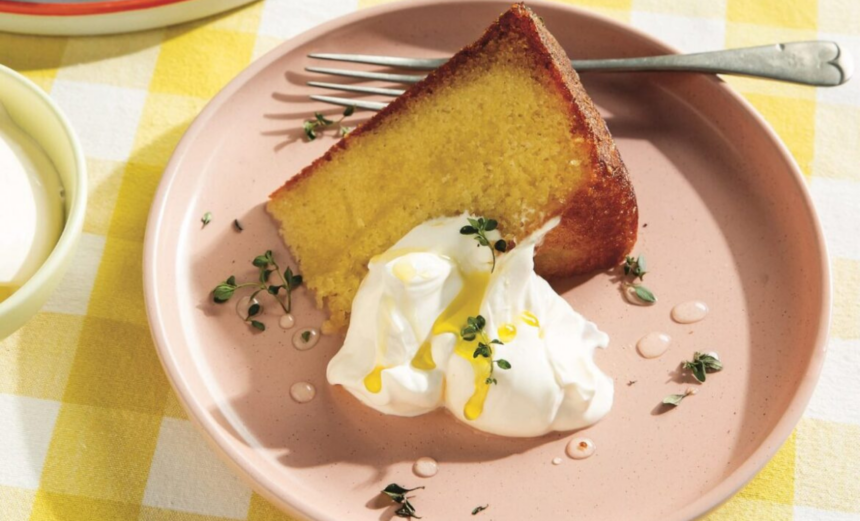
The same cake can then shift with the seasons: peaches or nectarines in summer, poached pear or quince in cooler weather, or fresh citrus when it is at its best. Greek yoghurt keeps it suited to daytime service, while crème fraîche or softly whipped cream moves it easily into dessert territory.
Olive Oil Cake With Lemon And Thyme Glaze
Recipe by Elizabeth Hewson, from Home Food (Murdoch Books, RRP $45). Photography by Nikki To. Method lightly edited into Foodservice Insights house style.
Serves 8
Ingredients
Cake
- 300g plain flour
- 1½ teaspoons baking powder
- ½ teaspoon bicarbonate of soda
- 330g caster sugar
- ½ teaspoon salt flakes
- 3 eggs, whisked
- 250ml full-cream milk
- 250ml mellow extra virgin olive oil, plus extra to finish
- 1 teaspoon vanilla bean paste
- Finely grated zest of 1 lemon
- 60ml lemon juice
Lemon And Thyme Glaze
- 45ml lemon juice
- 115g caster sugar
- Pinch of salt
- 2 tablespoons fresh thyme leaves
To Serve
- Sliced peaches or other seasonal fruit
- Crème fraîche or thick Greek yoghurt, optional
Method
- Heat a fan-forced oven to 170°C. Oil a deep 20cm round cake tin and line the base and sides with baking paper, leaving 5–10cm above the rim to help guide an even rise.
- Combine the flour, baking powder, bicarbonate of soda, caster sugar and salt in a large bowl.
- In a second bowl, whisk the eggs, milk, olive oil, vanilla, lemon zest and lemon juice. Add the dry mixture and stir just until combined.
- Pour the batter into the tin and bake for about 1 hour, or until golden and a skewer inserted into the centre comes out clean.
- Rest in the tin for 10 minutes before transferring the cake to a cooling rack and turning it upright.
- Mix the glaze ingredients and spoon over the warm cake. Leave to cool completely for at least 1 hour before slicing.
- Serve with seasonal fruit and, if desired, crème fraîche or thick Greek yoghurt. Finish with a light drizzle of olive oil.
Stored in a sealed container at room temperature, the cake will keep for up to three days.
Recipe source: Elizabeth Hewson, Home Food, Murdoch Books. Before publication, confirm permission to reproduce the recipe and Nikki To’s image with the relevant rights holder.