
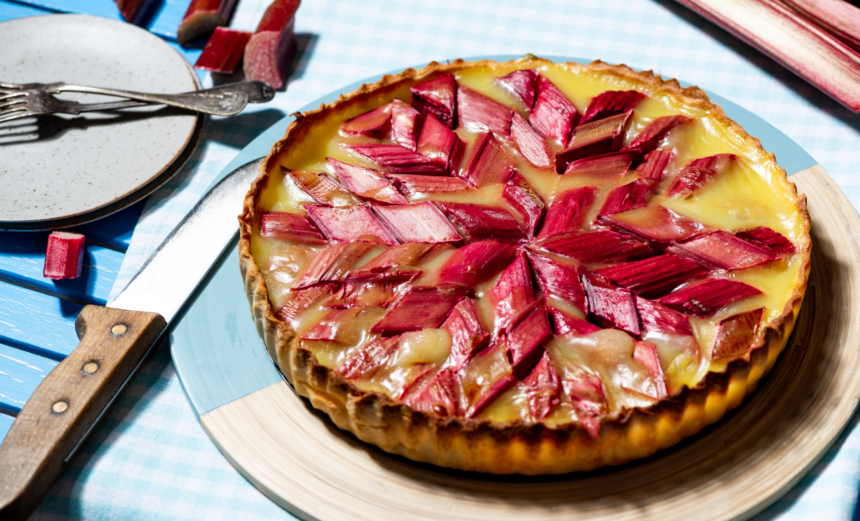
Rhubarb and blood oranges are both showing strong colour and quality in Australian markets this September. Bringing them together in a tray-baked tart gives cafes, bakeries and function kitchens a seasonal dessert that can be produced ahead, portioned consistently and served in several ways.
This recipe produces approximately 12 cafe-sized portions. Serve the tart at room temperature for a cabinet offer or warm it gently and add creme fraiche, vanilla ice-cream or pouring cream for a plated dessert.
Ingredients
- For the pastry:
- 350g Plain Flour
- 80g Icing Sugar
- 180g Unsalted Butter, cold
- 1 Egg
- Pinch of salt
- For the filling:
- 180g Unsalted Butter, softened
- 180g Caster Sugar
- 3 Eggs
- 180g Almond Meal
- 30g Plain Flour
- Finely grated zest of 2 blood oranges
- 1tsp Vanilla Paste
- For the fruit:
- 500g Rhubarb, cut into 5cm lengths
- 100g Caster Sugar
- Juice of 2 blood oranges and 2 blood oranges peeled and sliced into rounds.
- Flaked almonds and icing sugar, optional garnishes
Method
To make the pastry, rub or pulse the flour, icing sugar, butter and salt to a coarse crumb. Add the egg and mix only until the dough comes together. Flatten, wrap and chill for at least 30 minutes.
Roll the pastry and line a 30cm x 20cm tart tin or shallow baking tray. Chill again, then blind bake at 170°c until the base is dry and lightly golden. Allow it to cool slightly.
Meanwhile, place the rhubarb in a single layer, sprinkle with sugar and add the blood orange juice. Roast until just tender but still holding its shape. Drain and reserve the syrup for plating or drinks.
For the frangipane, beat the butter and sugar until combined and lighter in texture. Add the eggs gradually, then fold through the almond meal, flour, orange zest and vanilla. Spread into the tart shell. Arrange the rhubarb and orange slices over the surface, keeping the fruit clear of the tin edges. Bake at 165°c until the filling is set and evenly golden.
Cool fully before portioning with a hot, clean knife. The tart can be refreshed briefly in the oven during service. Before publication or menu use, kitchens should test the recipe with their equipment and confirm storage, shelf life and allergen procedures.